Category: New to Canada

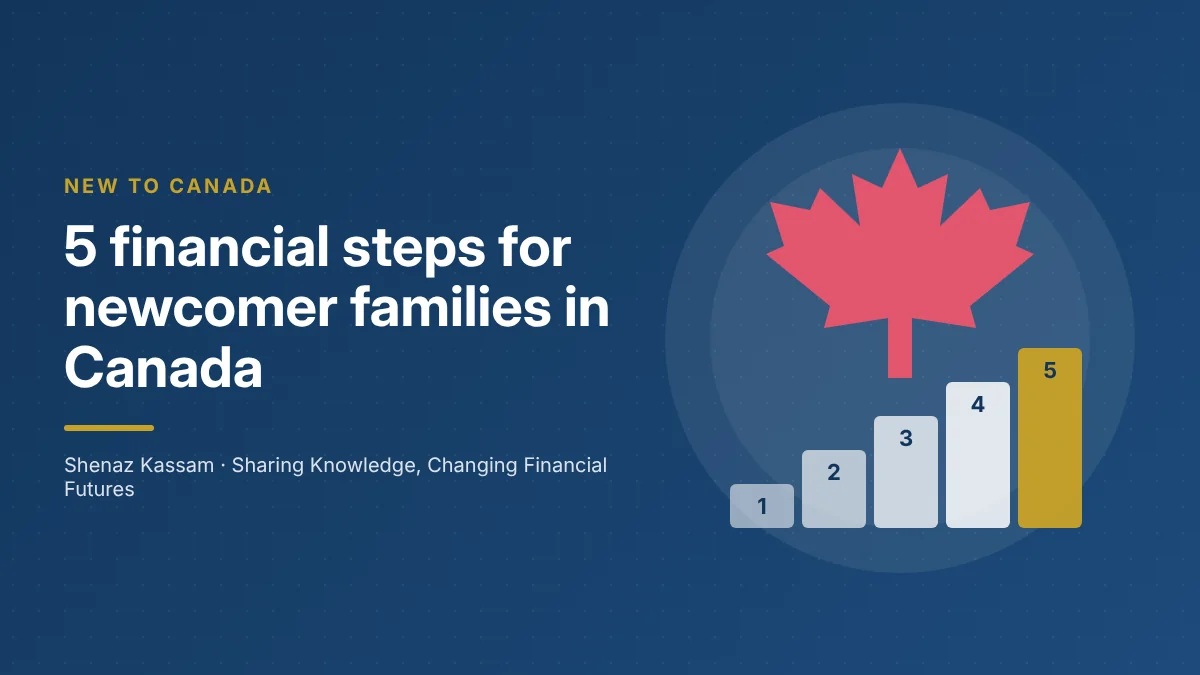
  • 5 financial steps for newcomer families in Canada

    5 financial steps for newcomer families in Canada

    Moving to Canada is a fresh start — and also a lot to manage. Here are five financial steps Shenaz walks newcomer families through, in the order that usually makes the most sense.

    1. Build an emergency fund and your credit. Set aside a few months of expenses and use a credit card responsibly to start building a Canadian credit history.
    2. Protect your income and your family. Life and disability insurance make sure your family is secure while you build your career. Coverage through a new job is a great start, but it may not be enough — and it ends if you change jobs.
    3. Check your health coverage. Depending on your province and status, there may be gaps before public coverage begins. Private health, dental and visitor plans can fill them.
    4. Open an RESP for your children. The government adds up to $500 a year through the Canada Education Savings Grant — free money for your child’s education.
    5. Start a TFSA and RRSP. These accounts let your savings grow tax-efficiently. TFSA room builds each year you are a resident aged 18 or older.

    You do not have to figure it out alone. A clear plan makes your new life in Canada feel secure.

    Let’s talk

    Shenaz has helped many newcomer families get started — and she speaks English and Gujarati.

    This article is general information only and is not personal financial, tax, legal or immigration advice. Product features vary by insurer — please speak with Shenaz about your own situation.
  • Super Visa insurance: a guide for families bringing parents to Canada

    Super Visa insurance: a guide for families bringing parents to Canada

    The Super Visa lets parents and grandparents of Canadian citizens and permanent residents visit their families for extended stays. It is one of the most meaningful ways newcomer families reunite — and one of the most important requirements is private medical insurance.

    Why insurance is required

    Visiting parents and grandparents are not covered by provincial health plans, so the Government of Canada requires Super Visa applicants to show proof of private health coverage before the visa is granted.

    The minimum requirements

    • At least $100,000 in emergency medical coverage
    • Valid for at least one year from the date of entry to Canada
    • Coverage for health care, hospitalization and repatriation
    • Since January 2025, coverage can also come from approved insurers outside Canada — but the policy must still meet Canada’s requirements

    Tips for choosing a policy

    • Consider more than the minimum. Medical costs above your coverage limit are paid by your family, so many families choose higher limits.
    • Ask about pre-existing conditions. Each insurer treats them differently, often with “stability” rules.
    • Compare deductibles. A higher deductible lowers the premium but means paying more out of pocket.
    • Check refund and renewal terms in case the visa is refused or your parents extend their stay.

    Bringing family together should feel joyful, not stressful. The right coverage gives everyone peace of mind.

    Let’s talk

    Shenaz helps families compare Super Visa and visitor insurance options in plain language — in English or Gujarati.

    This article is general information only and is not personal financial, tax, legal or immigration advice. Product features vary by insurer — please speak with Shenaz about your own situation.