Author: admin

  • Small steps today, a stronger financial future

    Small steps today, a stronger financial future

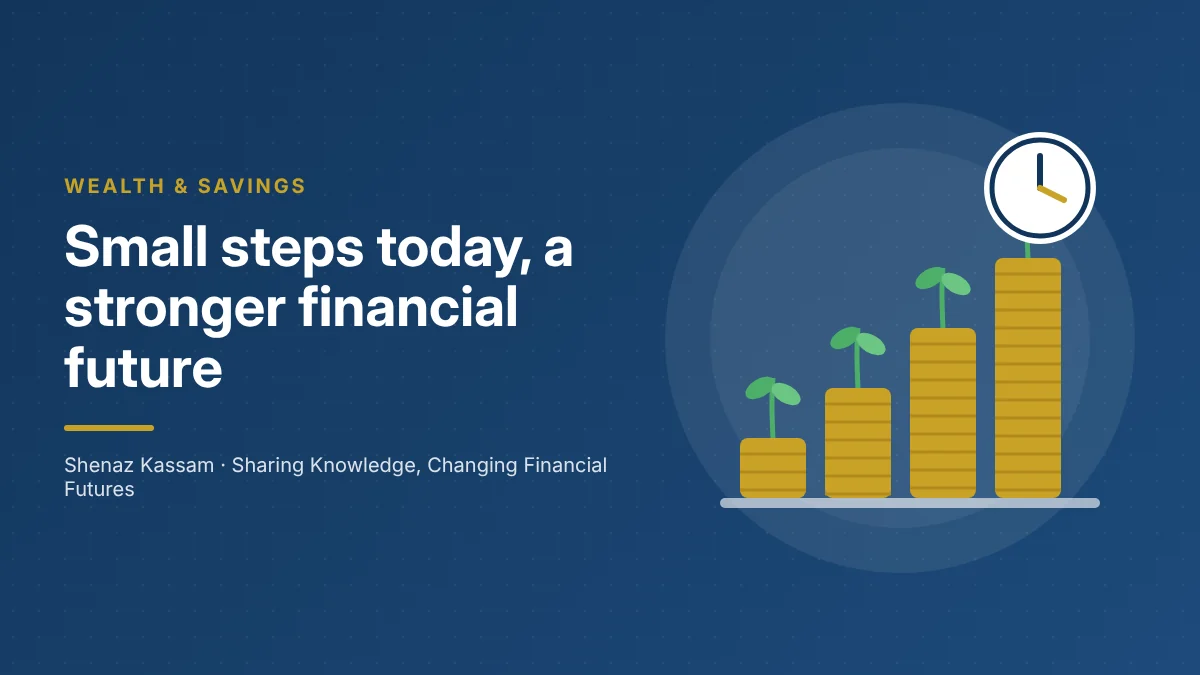
    Many people wait until they “have enough” to start saving. But building wealth is rarely about one big move — it is about small steps, repeated over time.

    Why consistency + time works

    • Compounding: growth starts earning growth of its own. The earlier you start, the more time it has to work.
    • Habit beats timing: regular contributions remove the stress of trying to pick the “perfect” moment.
    • Small amounts add up: a monthly amount you barely notice can become meaningful over 10 or 20 years.

    Simple ways to start

    • Pay yourself first — set up an automatic transfer on payday.
    • Use the right accounts: TFSA, RRSP, and RESP for your children.
    • Protect what you are building with the right insurance, so one unexpected event does not undo years of saving.
    • Review your plan once or twice a year as life changes.

    Small steps today, a stronger financial future. The secret is consistency + time.

    Let’s talk

    Every family is different. Send Shenaz a quick message and she will get back to you personally — no pressure, no obligation.

    This article is general information only and is not personal financial, tax, legal or immigration advice. Product features vary by insurer — please speak with Shenaz about your own situation.
  • RESPs: how the government helps you save for your child’s education

    RESPs: how the government helps you save for your child’s education

    Shenaz began her career in 2012 helping parents save for their children’s education — and the Registered Education Savings Plan (RESP) is still one of the best gifts you can give a child. Why? Because the government adds money to what you save.

    The Canada Education Savings Grant (CESG)

    • The government adds 20% on the first $2,500 you contribute each year — up to $500 per year.
    • Middle- and lower-income families may receive an extra 10% or 20% on the first $500 contributed each year.
    • The lifetime maximum is $7,200 per child.
    • Unused grant room can carry forward, so it is never too late to catch up.

    The Canada Learning Bond (CLB)

    Eligible lower-income families can receive $500 in the first year plus $100 for each eligible year up to age 15 — up to $2,000 — and no contribution is required.

    Getting started

    • Both you and your child need a Social Insurance Number (SIN) to open an RESP.
    • Start early — time is your biggest advantage.
    • Even small, regular contributions qualify for the grant.
    • Some families put part of the Canada Child Benefit into the RESP each month.

    Small steps today, a stronger financial future for your child.

    Let’s talk

    Shenaz can help you open an RESP, apply for the grants and build a plan that fits your budget.

    This article is general information only and is not personal financial, tax, legal or immigration advice. Product features vary by insurer — please speak with Shenaz about your own situation.
  • Thinking about a career in insurance? Start with the LLQP

    Thinking about a career in insurance? Start with the LLQP

    If you enjoy numbers, love helping people and want to build something meaningful, a career as a licensed insurance advisor could be a great fit. It all starts with the LLQP.

    What is the LLQP?

    The Life Licence Qualification Program is the course and exam you complete to become a licensed life and health insurance advisor in Canada. After passing, you apply for your licence in your province.

    Who is it for?

    • People who enjoy learning how money works
    • Career changers looking for a new direction
    • Newcomers to Canada who want to build a professional career here
    • Anyone wanting to explore an additional income opportunity

    You do not need a financial background. A willingness to learn, a strong work ethic and a genuine desire to help others is the beginning.

    Your path, step by step

    1. A no-pressure coffee chat with Shenaz
    2. Enroll in and study the LLQP, with guidance
    3. Write your provincial licensing exam
    4. Start helping families — with mentorship along the way

    Shenaz holds her own LLQP, has mentored new advisors as a Senior Managing Broker, and was recently named a New Senior Vice President at Greatway Financial.

    Your next opportunity may begin with simply being curious.

    Interested?

    Fill in the short interest form and Shenaz will reach out personally.

    Licensing requirements, course fees and timelines vary by province and provider.

  • 5 financial steps for newcomer families in Canada

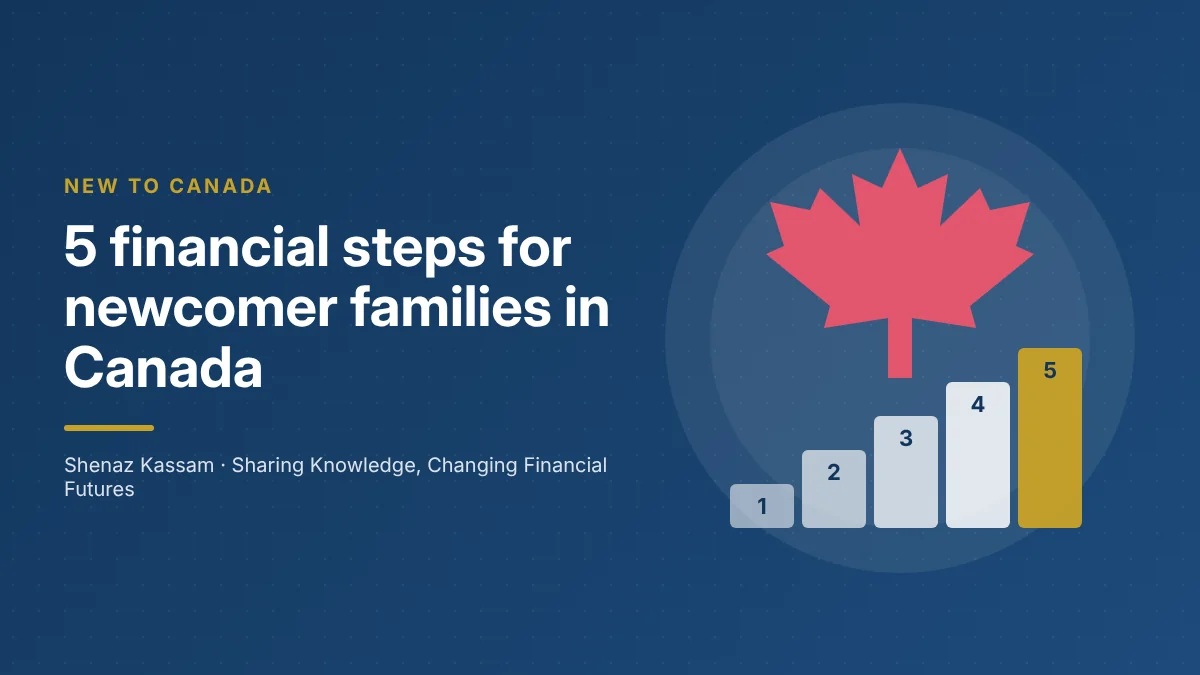
    5 financial steps for newcomer families in Canada

    Moving to Canada is a fresh start — and also a lot to manage. Here are five financial steps Shenaz walks newcomer families through, in the order that usually makes the most sense.

    1. Build an emergency fund and your credit. Set aside a few months of expenses and use a credit card responsibly to start building a Canadian credit history.
    2. Protect your income and your family. Life and disability insurance make sure your family is secure while you build your career. Coverage through a new job is a great start, but it may not be enough — and it ends if you change jobs.
    3. Check your health coverage. Depending on your province and status, there may be gaps before public coverage begins. Private health, dental and visitor plans can fill them.
    4. Open an RESP for your children. The government adds up to $500 a year through the Canada Education Savings Grant — free money for your child’s education.
    5. Start a TFSA and RRSP. These accounts let your savings grow tax-efficiently. TFSA room builds each year you are a resident aged 18 or older.

    You do not have to figure it out alone. A clear plan makes your new life in Canada feel secure.

    Let’s talk

    Shenaz has helped many newcomer families get started — and she speaks English and Gujarati.

    This article is general information only and is not personal financial, tax, legal or immigration advice. Product features vary by insurer — please speak with Shenaz about your own situation.
  • Critical illness vs. disability insurance: what is the difference?

    Critical illness vs. disability insurance: what is the difference?

    Life is full of what-ifs. Two of the most important protections for working families are critical illness and disability insurance. They sound similar, but they solve different problems.

    Critical illness insurance

    • Pays a one-time lump sum if you are diagnosed with a covered illness, such as cancer, heart attack or stroke, and survive the waiting period.
    • You can use the money however you need: treatment, travel, mortgage payments or time off with family.
    • A personally owned policy’s benefit is generally received tax-free.

    Disability insurance

    • Replaces part of your monthly income if illness or injury stops you from working.
    • Payments continue for a set period while you are unable to work.
    • Protects your lifestyle and helps you keep paying the bills.

    Which one do I need?

    Many families need both: critical illness for the big one-time costs of a serious diagnosis, and disability coverage to keep the paycheque coming. Coverage through work can help, but it may not be enough — and it usually ends when you leave your job.

    Income protection, critical illness coverage and disability coverage — protect what matters most.

    Let’s talk

    Every family is different. Send Shenaz a quick message and she will get back to you personally — no pressure, no obligation.

    This article is general information only and is not personal financial, tax, legal or immigration advice. Product features vary by insurer — please speak with Shenaz about your own situation.
  • Super Visa insurance: a guide for families bringing parents to Canada

    Super Visa insurance: a guide for families bringing parents to Canada

    The Super Visa lets parents and grandparents of Canadian citizens and permanent residents visit their families for extended stays. It is one of the most meaningful ways newcomer families reunite — and one of the most important requirements is private medical insurance.

    Why insurance is required

    Visiting parents and grandparents are not covered by provincial health plans, so the Government of Canada requires Super Visa applicants to show proof of private health coverage before the visa is granted.

    The minimum requirements

    • At least $100,000 in emergency medical coverage
    • Valid for at least one year from the date of entry to Canada
    • Coverage for health care, hospitalization and repatriation
    • Since January 2025, coverage can also come from approved insurers outside Canada — but the policy must still meet Canada’s requirements

    Tips for choosing a policy

    • Consider more than the minimum. Medical costs above your coverage limit are paid by your family, so many families choose higher limits.
    • Ask about pre-existing conditions. Each insurer treats them differently, often with “stability” rules.
    • Compare deductibles. A higher deductible lowers the premium but means paying more out of pocket.
    • Check refund and renewal terms in case the visa is refused or your parents extend their stay.

    Bringing family together should feel joyful, not stressful. The right coverage gives everyone peace of mind.

    Let’s talk

    Shenaz helps families compare Super Visa and visitor insurance options in plain language — in English or Gujarati.

    This article is general information only and is not personal financial, tax, legal or immigration advice. Product features vary by insurer — please speak with Shenaz about your own situation.
  • Why life insurance from work may not be enough

    Why life insurance from work may not be enough

    One important question I often ask people is: is your only life insurance coverage through your employer?

    Having insurance at work is a great start. But is it enough to protect your family financially?

    Questions worth asking

    • What happens if you change jobs or lose your employment?
    • What if your workplace benefits end?
    • Does your family need more coverage than your employer provides?
    • What if you become critically ill, disabled or unable to earn an income?
    • Will your loved ones need financial support for years to come?

    Workplace insurance is a benefit, but it may not be a complete financial protection strategy. Your family’s financial security should not depend entirely on where you work.

    Take the time to understand what you have, identify any gaps, and explore protection that you own and can take with you.

    Protecting your family is not just about having insurance. It’s about having the RIGHT protection when life takes an unexpected turn.

    Let’s talk

    Every family is different. Send Shenaz a quick message and she will get back to you personally to review what you have and find any gaps — no pressure, no obligation.

    Originally shared by Shenaz on LinkedIn. Follow her on Instagram for more tips. This article is general information, not personal financial advice.

  • In life, things can change in a heartbeat

    In life, things can change in a heartbeat

    ⚽ In soccer, a lot can change in 90 minutes. In life, it can change in a heartbeat.

    We prepare for the unexpected on the field. Shouldn’t we prepare for the unexpected in life, too?

    Life insurance isn’t about expecting the worst. It’s about protecting the people who matter most, even when life doesn’t go as planned.

    🛡️ Make the ultimate defensive play. Protect your family’s financial future.

    Let’s talk

    Every family is different. Send Shenaz a quick message and she will get back to you personally to review what you have and find any gaps — no pressure, no obligation.

    Originally shared by Shenaz on LinkedIn. Follow her on Instagram for more tips. This article is general information, not personal financial advice.

  • TFSA or life insurance? Why it’s not one or the other

    TFSA or life insurance? Why it’s not one or the other

    A Tax-Free Savings Account (TFSA) can be a great way to save and invest for future goals. But here’s an important question: what happens to the financial plan if life is shorter than expected?

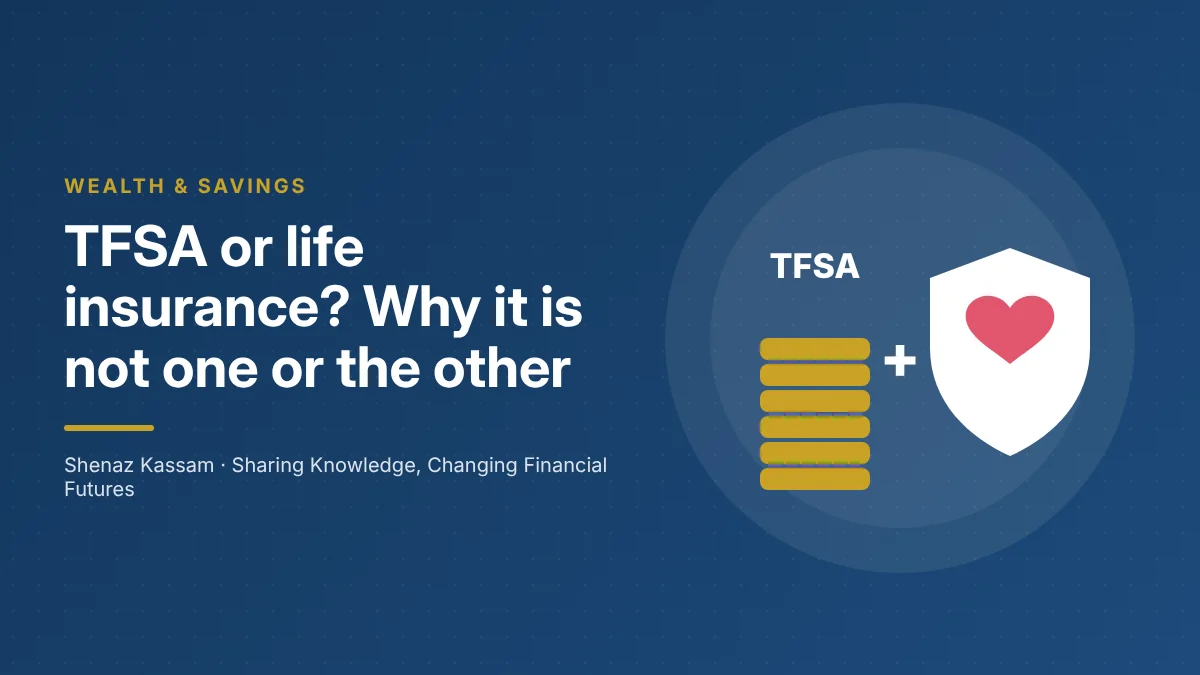
    Savings grow over time. Life insurance is designed to pay a tax-free death benefit to your beneficiaries if you pass away while covered — which can mean a much larger amount for your family, much sooner, than the same monthly amount saved in a TFSA.

    Look at both sides of the equation

    • 💰 Build wealth
    • 🛡️ Protect wealth
    • ❤️ Protect the people who matter most

    It’s not about choosing a TFSA or insurance. It’s about understanding what each one is designed to do — and how they can work together in your plan.

    Let’s talk

    Every family is different. Send Shenaz a quick message and she will get back to you personally to review what you have and find any gaps — no pressure, no obligation.

    Originally shared by Shenaz on LinkedIn. Follow her on Instagram for more tips. This article is general information, not personal financial advice.

  • We insure our cars and homes — why not our lives?

    We insure our cars and homes — why not our lives?

    We insure our cars against accidents that may never happen. We insure our homes against losses we hope never occur.

    Yet many of us hesitate to insure the one thing we know we won’t have forever: our lives.

    Life insurance isn’t about expecting the worst. It’s about protecting the people who matter most when the inevitable happens.

    We cannot prevent every tragedy, but we can prepare for its financial consequences.

    Let’s talk

    Every family is different. Send Shenaz a quick message and she will get back to you personally to review what you have and find any gaps — no pressure, no obligation.

    Originally shared by Shenaz on LinkedIn. Follow her on Instagram for more tips. This article is general information, not personal financial advice.